



.png)
Dr. Samsul Alam
Specialist (Analytical)
Research Areas
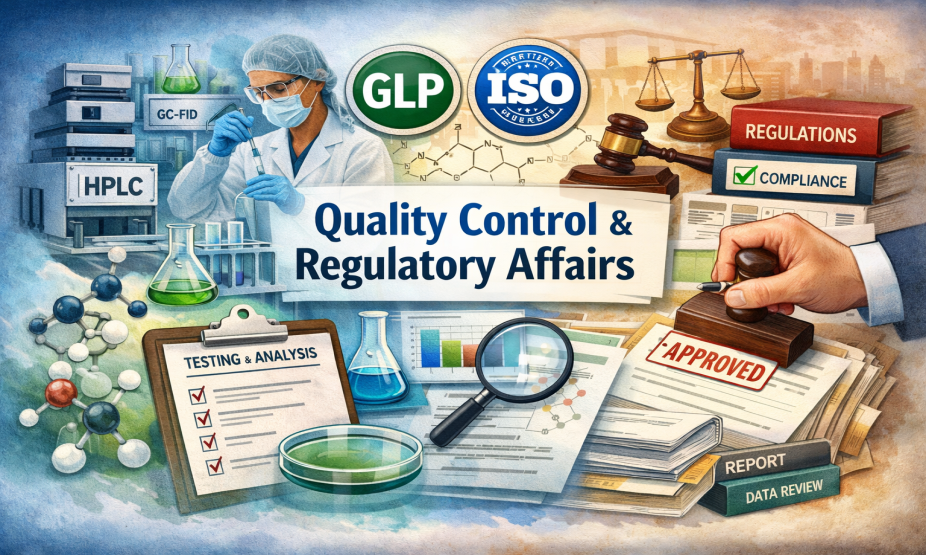
Quality Control and Regulatory Affairs
Our institute is actively involved in quality control and regulatory activities to ensure that chemical and pesticide formulations meet established quality standards and regulatory requirements. This includes routine analytical testing of products using advanced analytical techniques to verify their composition, purity, and performance. The institute also conducts method development and validation, maintains proper documentation, and ensures compliance with national and international guidelines such as GLP and ISO standards. In addition, regulatory support activities include preparation and evaluation of technical reports, data assessment, and assistance in product registration and approval processes to ensure product safety, quality, and regulatory compliance.
Active Ingredient Content and Physico-Chemical Analysis
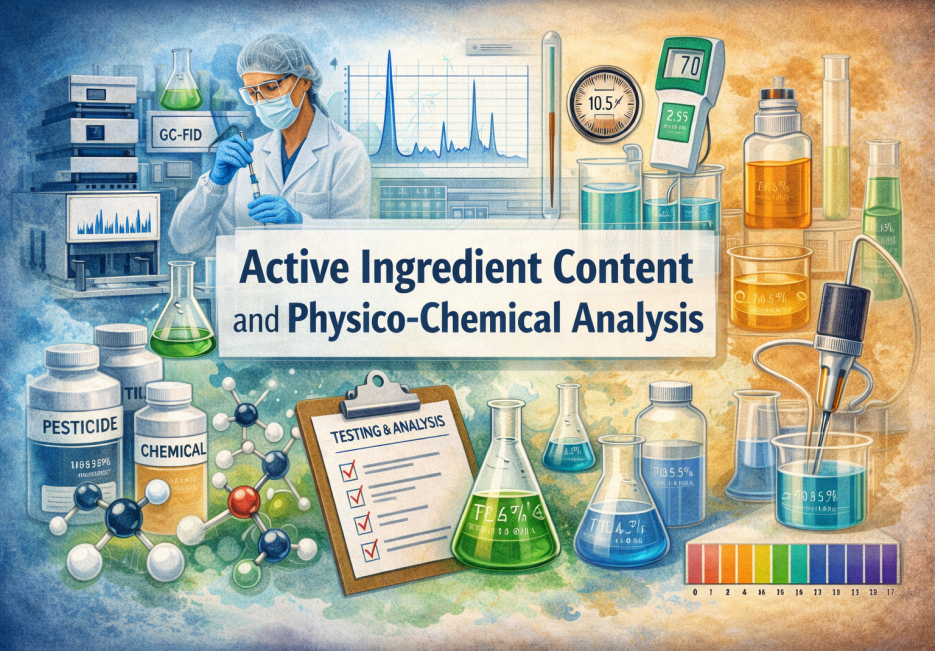
We focus on the determination of active ingredient (AI) content to assess the concentration and purity of active compounds present in pesticide and chemical formulations. Analytical techniques such as High-Performance Liquid Chromatography (HPLC) and Gas Chromatography with Flame Ionization Detection (GC-FID) are employed for accurate and reliable quantification of active ingredients, supporting quality control and regulatory compliance.
We also focus on the physicochemical analysis of formulation samples to evaluate their quality, stability, and compliance with standard specifications. Important parameters including pH, density, viscosity, solubility, moisture content, and appearance are examined using standard analytical procedures to ensure product consistency, safety, and effectiveness.
Heavy Metal/ Trace Metal Detection using ICP-MS
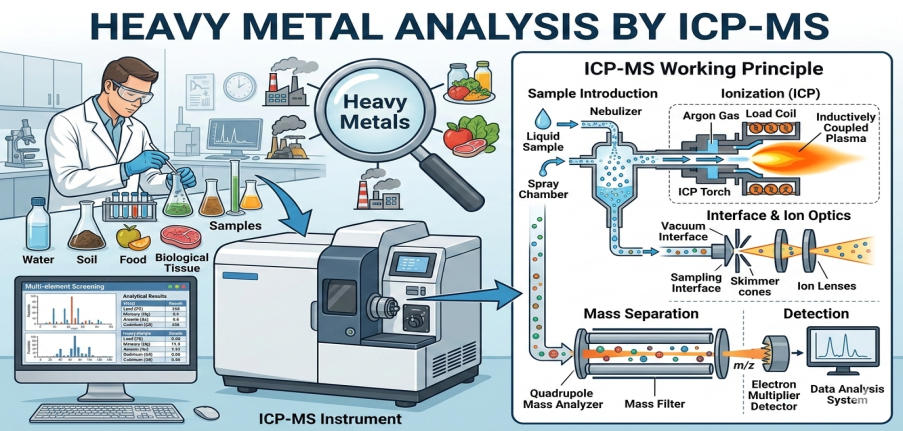
We Specialize in the Determination of heavy and trace metal contaminants in environmental and chemical samples using Inductively Coupled Plasma–Mass Spectrometry (ICP-MS). This technique provides highly sensitive and accurate detection of metals at trace levels (ppb–ppt), enabling monitoring of toxic elements such as lead, cadmium, arsenic, and mercury for environmental safety, quality control, and regulatory compliance.
Identification and Quantification of Pesticide Residues:
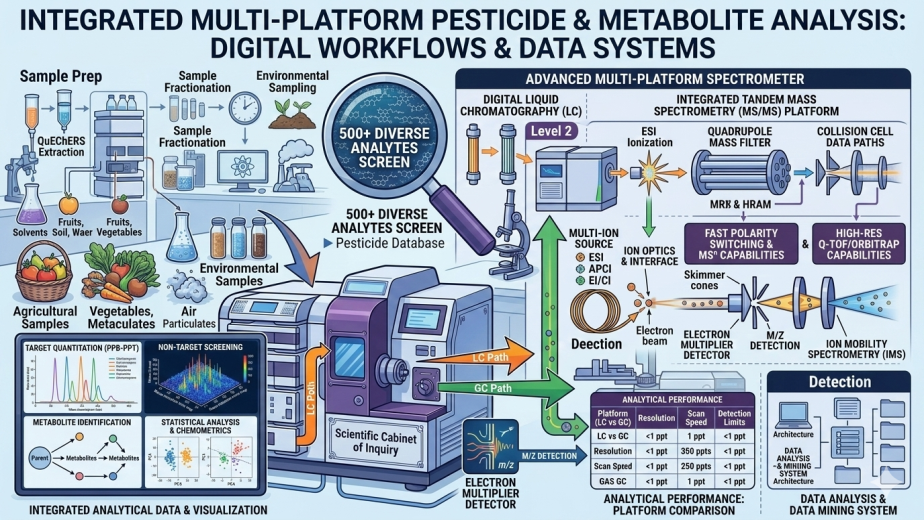
This research area focuses on the detection and measurement of pesticide residues present at trace levels in food and environmental matrices such as fruits, vegetables, soil, and water. Effective sample preparation techniques, including QuEChERS and liquid-liquid extraction, are used to isolate pesticide compounds from complex matrices prior to analysis. Advanced analytical instruments such as LC-MS/MS, GC-MS/MS, HPLC, and GC are widely employed for accurate identification and quantification due to their high sensitivity, selectivity, and reliability. These techniques allow simultaneous multi-residue analysis of numerous pesticides in a single run. Such studies play an important role in food safety monitoring, environmental assessment, and ensuring compliance with regulatory standards such as Maximum Residue Limits (MRLs).
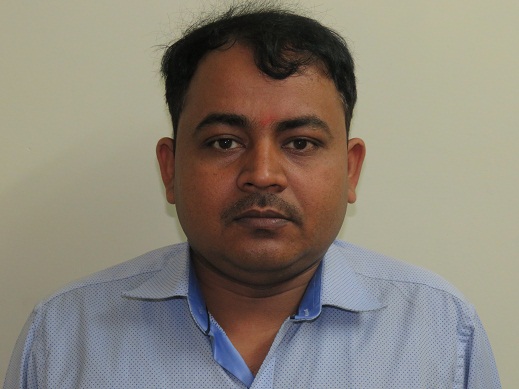
Group Head

Dr. Samsul Alam
Specialist
Email ID: samsul.alam@ipft.gov.in
Dr. Samsul Alam is an experienced analytical scientist currently working as Specialist (Analytical) at the Institute of Pesticide Formulation Technology (IPFT), Gurugram, India, with more than 18 years of research experience in analytical chemistry related to pesticides, environmental contaminants, and heavy metals. He obtained his Ph.D., M.Sc., and B.Sc. in Agricultural Chemicals from Bidhan Chandra Krishi Viswavidyalaya, West Bengal. His research focuses on analytical method development and validation, pesticide residue analysis, environmental monitoring, heavy metal speciation, impurity profiling, and certified reference materials. He is empanelled as Lead Assessor and Technical Assessor with the National Accreditation Board for Testing and Calibration Laboratories (NABL) and has served as Academic Counsellor for the Post Graduate Diploma in Analytical Chemistry at Indira Gandhi National Open University (IGNOU). He has received recognition at national and international scientific forums for his contributions to analytical chemistry and pesticide residue research. His professional contributions include invited lectures, technical consultancy for government projects, and academic counseling at IGNOU. He has supervised postgraduate and doctoral students and has authored numerous peer-reviewed publications in reputed international journals, along with book chapters and patents, demonstrating significant contributions to analytical science, regulatory research, and environmental safety.
Scientific Staff
Dr. Sudeep Mishra
Scientist
Email ID: mishrasudeep48@gmail.com
Dr. Sudeep Mishra is an accomplished Analytical Scientist with over 17 years of experience in pesticide residue analysis, environmental contamination assessment, and regulatory laboratory management at the Institute of Pesticide Formulation Technology (IPFT), Government of India. He currently serves as Scientist (Analytical), NABL Technical Manager for an ISO/IEC 17025:2017 accredited laboratory, and OECD-GLP Study Director, demonstrating strong leadership in quality-compliant analytical research. His expertise includes advanced chromatographic and mass spectrometric techniques such as GC-MS/MS, LC-MS/MS, LC-HRMS, and LC-ICP-MS, along with method development, validation, measurement uncertainty estimation, and dietary risk assessment of pesticide residues in food and environmental matrices. Dr. Mishra has successfully led more than 20 GLP-compliant pesticide residue and dissipation studies for major agrochemical industries, contributing to regulatory data generation and national pesticide monitoring programs. He has also authored over 48 research publications in reputed international journals and contributed book chapters to Springer, reflecting his strong academic impact in agrochemical and environmental analytical research. His work spans residue monitoring in cereals, vegetables, and spices, environmental contamination studies, heavy metal analysis, and risk assessment modeling, and he has received professional recognition including a Best Poster Award at an IUPAC international conference for his scientific contributions.

Mr. Biswajit Horijan
Scientist
Email ID: biswajithorijan67@gmail.com
Mr. Biswajit Horijan is a Scientist in the Analytical Department at the Institute of Pesticide Formulation Technology (IPFT), Gurugram, specializing in natural product chemistry and bioassay research. He holds an M.Sc. in Agricultural Chemicals from the Indian Agricultural Research Institute (IARI), New Delhi, and has expertise in the extraction, isolation, and purification of bioactive compounds from plant matrices using chromatographic techniques, followed by structural elucidation through NMR spectroscopy and mass spectrometry. His work also involves designing and conducting bioassays with live insects, maintaining laboratory insect cultures, and performing computational biology studies such as molecular docking and molecular dynamics simulations for biomolecular interaction analysis. Additionally, he is skilled in experimental design, statistical data analysis, and handling advanced analytical instruments including GC-FID, GC-MS/MS, LC-MS/MS, HRMS, HPLC, NMR, ICP-MS, and CHNS/O analyzers, supporting multidisciplinary research in agrochemical and natural product studies.
Ph.D Students
Project Personnel

Ms. Shilpa Kumari
Documentation Assistant
Shilpa Kumari is an experienced professional in laboratory documentation and Test Item Control Office (TICO) Management, with expertise in NABL ISO/IEC-17025:2017 and GLP-compliant procedures standards. She manages the full sample lifecycle from receipt and coding to analysis reporting, ensuring accuracy, traceability, and regulatory compliance. Skilled in maintaining quality systems, preparing and revising SOPs, and coordinating with study directors, QA units, and sponsors, she also oversees instrument calibration, maintenance, and performance checks in TICO. Additionally, she handles storage monitoring, archival, disposal, and return of test and reference items, while supporting sample preparation for pesticide residue analysis in diverse food commodities and agrochemical products using GC-MS/MS and LC-MS/MS. Her proficiency in documentation, financial tracking, and laboratory workflow ensures operational efficiency and transparency.
Interns / Trainees
Alumni
NABL accreditation with enhanced scope: ISO/IEC 17025: 2017 with the scope for 278 pesticides in residue scope and 150 pesticide products (approx.) in formulation scope.
NABL accreditation with enhanced scope: ISO/IEC 17025: 2017 with the scope for 278 pesticides in residue scope and 150 pesticide products (approx.) in formulation scope.

OECD GLP certification of IPFT: Physical-Chemical studies including five batch analysis and Residue analysis. IPFT has become the First Govt. GLP Laboratory in the country for physical-chemical param
OECD GLP certification of IPFT: Physical-Chemical studies including five batch analysis and Residue analysis. IPFT has become the First Govt. GLP Laboratory in the country for physical-chemical parameters, pesticide residue and Five batch analysis.
Central Insecticide Board (CIB)/Registration Committee (RC) Recognition by CIB/RC for testing of pesticide for bio-efficacy and phyto-toxicity studies for registration purpose.
Central Insecticide Board (CIB)/Registration Committee (RC) Recognition by CIB/RC for testing of pesticide for bio-efficacy and phyto-toxicity studies for registration purpose.

APEDA, New Delhi: Recognized by APEDA, New Delhi for testing of pesticide residue in food commodities for export purpose.
APEDA, New Delhi: Recognized by APEDA, New Delhi for testing of pesticide residue in food commodities for export purpose.
The lab is Recognised by DSIR.
The lab is Recognised by DSIR.
Completed
Name of the major clients served –
Govt. organizations
ICMR-National Institute of Nutrition
Central Medical Services Society
Central Warehousing Corporation
Central Insecticide Laboratory
ICAR-National Research Centre for IPM
HIL India Ltd.
Indian Statistical Institute
Office of Customs, New Delhi
Central Sericultural Research & Training Institute
Academic institutions
Indian Institute of Technology, Hyderabad
Galgotias university
SGT university
Amity university
Meerut college
Guru Govind Singh Indraprastha University
National Forensic Science University
Netaji Subhash University of Technology
JCDM college of pharmacy
All India Institute of Ayurveda
Centurion University of Technology & Management
Industries
Coromandel international
Crystal crop Protection Pvt Ltd.
GSP Crop Science Pvt. Ltd.
Dhanuka Agritech Ltd.
Indogulf cropsciences Ltd.
Iffco-MC Crop Sciences Pvt. Ltd.
Parijat (India) Industries Pvt. Ltd.
Bharat Rasayan Ltd.
Alok industries
Mankind agritech Pvt Ltd.
MSME Industries
Urbane Krishi Pvt. Ltd.
SJV Biotech Pvt. Ltd.
Indian Pest Control
Institute for Industrial Research and Toxicology
Nexcellence consulting services pvt ltd.
Baba fine chemicals
Brijwasi plastics Pvt. Ltd.
Heritage Organics Pvt Ltd.
Innovexia Chemicals LLP
Scitesla Pvt. Ltd.
Ongoing
Selected Publications
-
Chaturvedi, M., Kaur, N., Alam, S., & Sharma, S. (2025). Sustainable approach for degradation of low-density polyethylene plastic waste using ligninolytic white rot fungus. Journal of Basic Microbiology, 65(4), e2400442. https://doi.org/10.1002/jobm.202400442 (Impact Factor: 3.5)
-
Anil, A. S., Alam, S., & Thakur, L. K. (2024). Optimized mercury speciation analysis using LC-ICP-MS and microwave-assisted extraction for precise determination of methylmercury in fish, rice, and soil. Journal of Food Composition and Analysis, 129, 106092. https://doi.org/10.1016/j.jfca.2024.106092 (Impact Factor: 4.6)
-
Kumar, V., Mishra, S., Alam, S., & Thakur, L. K. (2025). Levels of chlorpyrifos, ethion, lambda-cyhalothrin, pendimethalin, and triazophos pesticide residues in vegetables. Journal of Food Composition and Analysis, 137, 106853. (Impact Factor: 4.6)
-
Devi, O. Z., Mishra, S., Alam, S., & Thakur, L. K. (2025). Single-quadrupole gas chromatography estimation of selected pesticide residues in spices from the National Capital Region of Delhi. Environmental Monitoring and Assessment, 197(4), 1–11. (Impact Factor: 3.0)
-
Mishra, S., Kumar, V., Singh, M. K., Saini, M. K., Alam, S., Kasana, P., Saloni, & Thakur, L. K. (2025). Monitoring and risk assessment of pesticide residues in vegetables, soil, and water in Haryana, India. Environmental Science and Pollution Research, 32(13), 8358–8377. https://doi.org/10.1007/s11356-025-36218-5 (Impact Factor: 6.2)
Opportunities
IPFT provides diverse opportunities for employees, trainees, and students to enhance their knowledge, technical skills, and professional development. Employees benefit from a collaborative scientific environment where they can engage in advanced research projects, use modern analytical instruments, publish research papers, and participate in national and international conferences and workshops. Trainees and interns gain valuable hands-on experience through laboratory training, exposure to research methodologies, and participation in real-time experimental work under the guidance of experienced scientists. For students, IPFT offers internships, dissertation projects, and training programs that help them understand scientific concepts, experimental design, and data interpretation. In addition to academic and training activities, IPFT also provides research and development (R&D) support to industries, including analytical testing, method development, product evaluation, and technical consultancy to solve industrial challenges. These opportunities not only strengthen technical competence but also encourage innovation, critical thinking, teamwork, and problem-solving skills, thereby preparing individuals for successful careers in academia, industry, and regulatory sectors.